

Jacobaea vulgaris Gaertn.
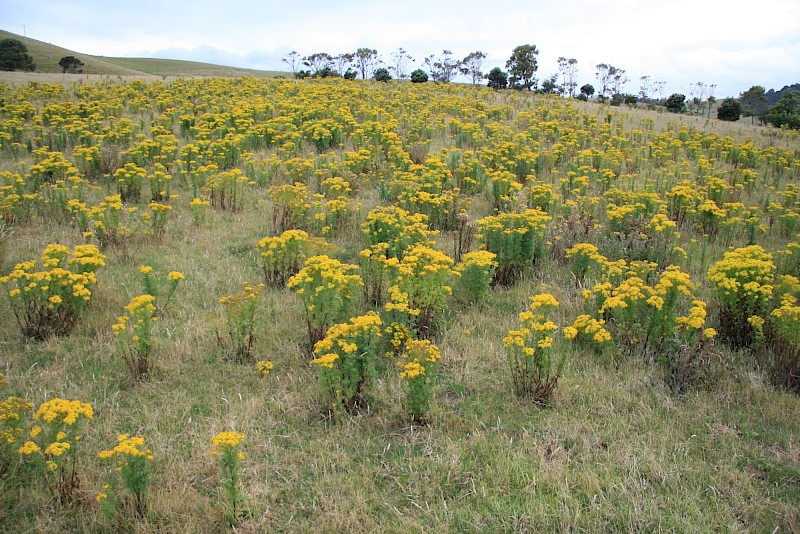
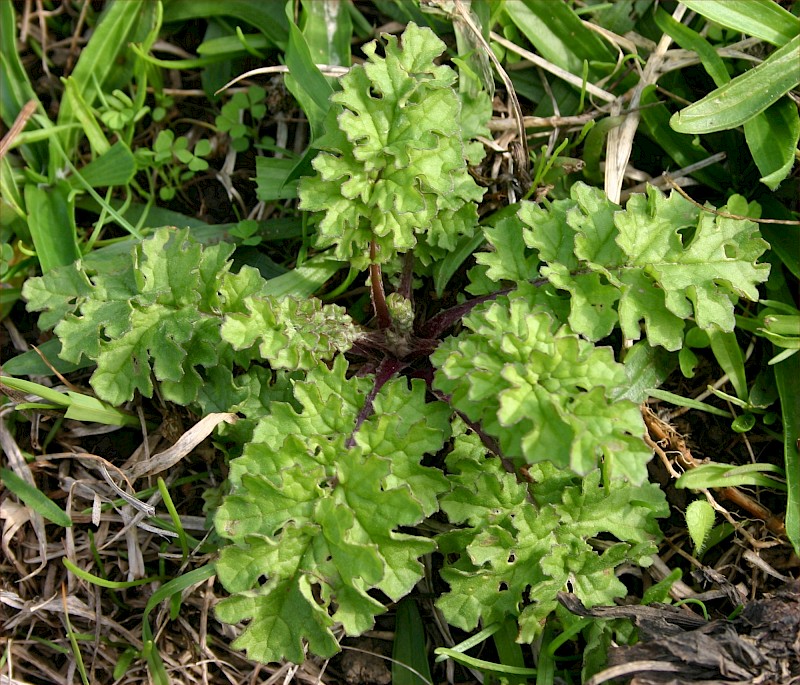
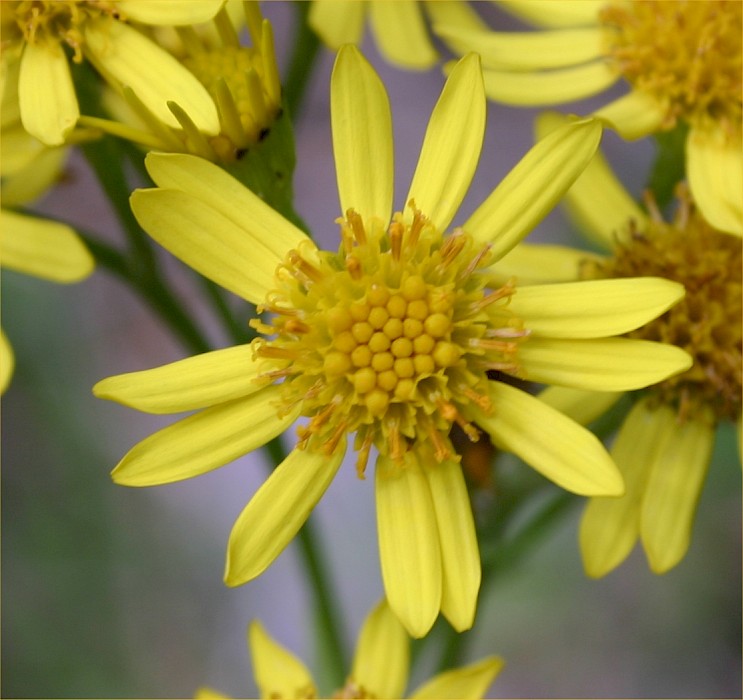
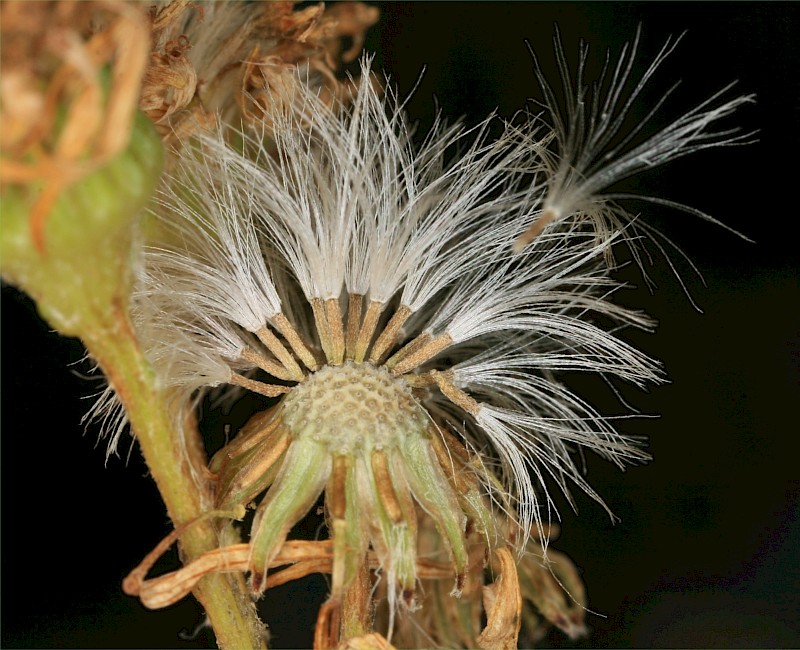
Ragwort (Jacobaea vulgaris) is a short-lived, perennial herb that is native to Europe and western Asia. It was introduced to New Zealand as a contaminant of pasture seed and was first recorded in the wild (naturalised) in 1894. The plant forms a rosette of deeply divided leaves in its first year, followed by upright flowering stems that typically grow up to about 1 metre tall. It flowers from October to May, producing clusters of bright yellow, daisy-like flower heads, which develop into seeds topped with a tuft of fine hairs. It tolerates frost, drought, grazing and a wide range of soil types. It reproduces by seed and vegetatively from the crown and root fragments. Seeds are dispersed by wind, water, animals and human activities. Root fragments can produce new plants after cultivation or other disturbance. All parts of the plant contain toxic pyrrolizidine alkaloids and are poisonous to livestock and people if consumed.
This description has been automatically generated using information from trusted sources. If you notice any errors or omissions, please let us know.
- Environmental Weeds
- Auckland RPMP - Sustained Control
- Bay of Plenty RPMP - Sustained Control
- Chatham Islands RPMP - Progressive Containment
- Gisborne RPMP - Sustained Control
- Hawke’s Bay RPMP - Sustained Control
- Manawatū-Whanganui (Horizons) RPMP - Progressive Containment
- Otago RPMP - Sustained Control
- Southland RPMP - Sustained Control
- Taranaki RPMP - Sustained Control
- Tasman-Nelson RPMP - Sustained Control
- Waikato RPMP - Sustained Control
- West Coast RPMP - Sustained Control
- Canterbury RPMP - Organism of Interest