

Clematis vitalba L.
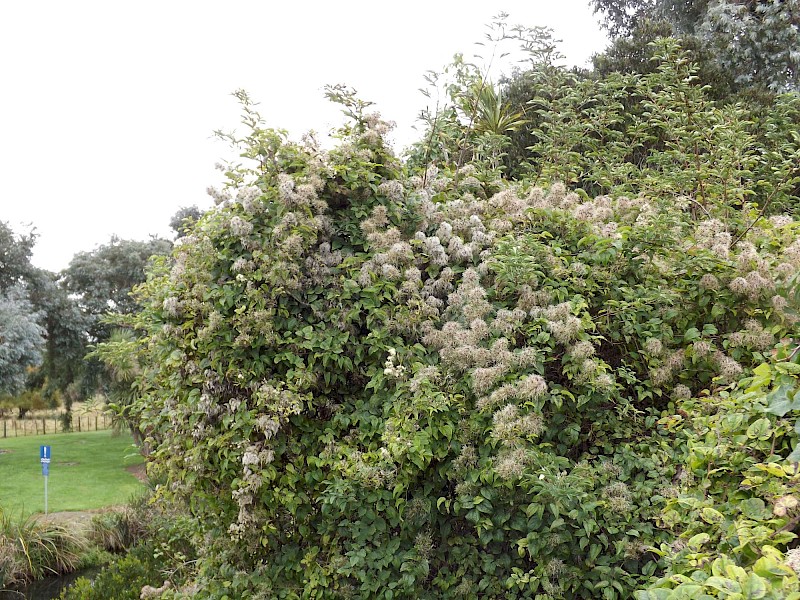
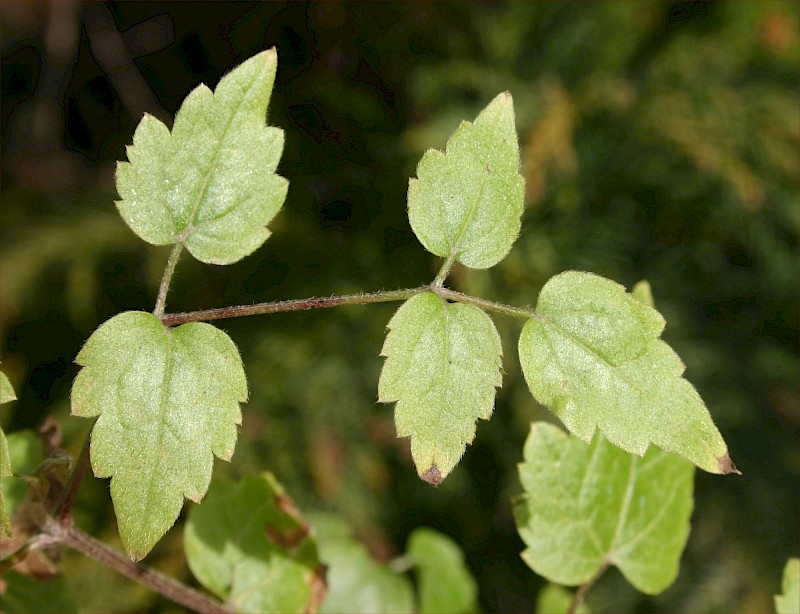
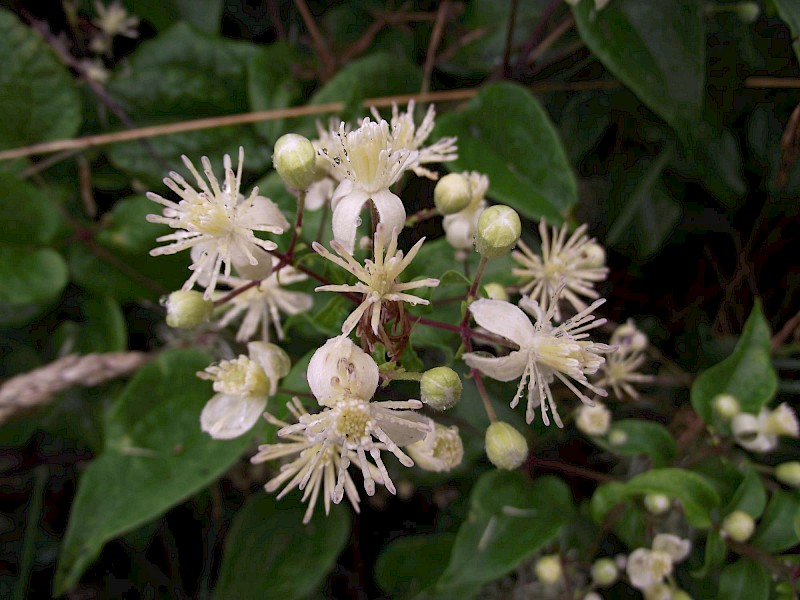
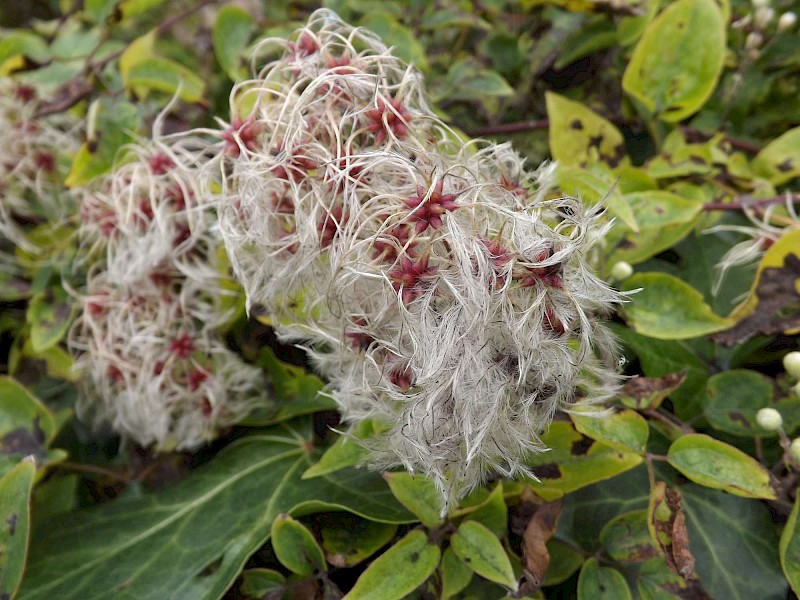
Old man's beard (Clematis vitalba) is a long-lived, deciduous climbing vine that is native to Europe and south-west Asia. It was introduced to New Zealand as a garden ornamental and was first recorded in the wild (naturalised) in 1940. The plant climbs up to about 20 metres high using other plants for support. It has long, woody, ribbed stems with pale bark that rubs off easily, and leaves divided into five leaflets. It flowers from December to May, producing masses of creamy white flowers, followed by grey, fluffy seed heads from March to October. It tolerates frost, moderate shade, damp conditions, wind, salt and a wide range of soil types. It reproduces by seed and vegetative growth. Seeds are dispersed by wind. Vines that touch the ground can develop roots, stem fragments can form new plants, and damaged plants resprout after grazing or other physical damage. The plant produces large quantities of seed, some of which can remain viable in the soil for up to five years.
This description has been automatically generated using information from trusted sources. If you notice any errors or omissions, please let us know.
- Environmental Weeds
- National Pest Plant Accord (NPPA)
- Unwanted Organisms
- Auckland RPMP - Progressive Containment
- Bay of Plenty RPMP - Progressive Containment
- Bay of Plenty RPMP - Sustained Control
- Canterbury RPMP - Site-led
- Canterbury RPMP - Sustained Control
- Chatham Islands RPMP - Eradication
- Gisborne RPMP - Progressive Containment
- Hawke’s Bay RPMP - Progressive Containment
- Manawatū-Whanganui (Horizons) RPMP - Progressive Containment
- Northland RPMP - Exclusion
- Otago RPMP - Progressive Containment
- Southland RPMP - Progressive Containment
- Taranaki RPMP - Sustained Control
- Tasman-Nelson RPMP - Organism of Interest
- Tasman-Nelson RPMP - Sustained Control
- Waikato RPMP - Progressive Containment
- Waikato RPMP - Site-led
- Greater Wellington RPMP - Site-led
- West Coast RPMP - Progressive Containment