
Calamagrostis arenaria (L.) Roth
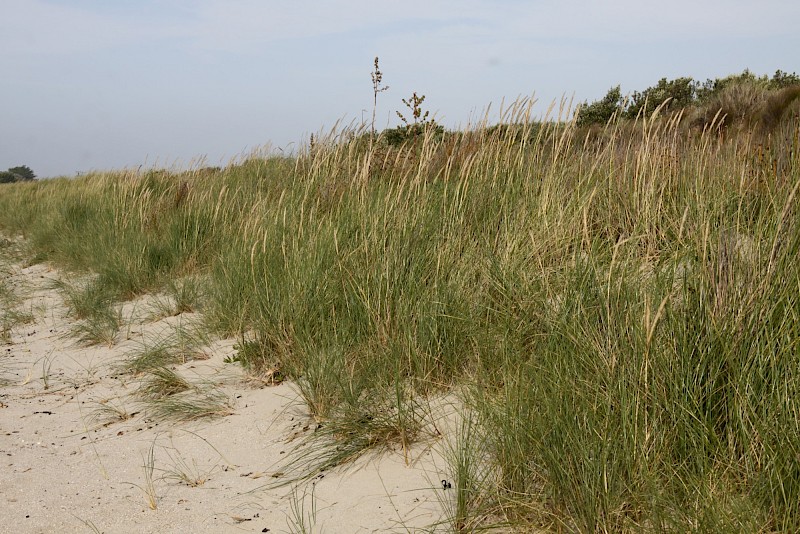
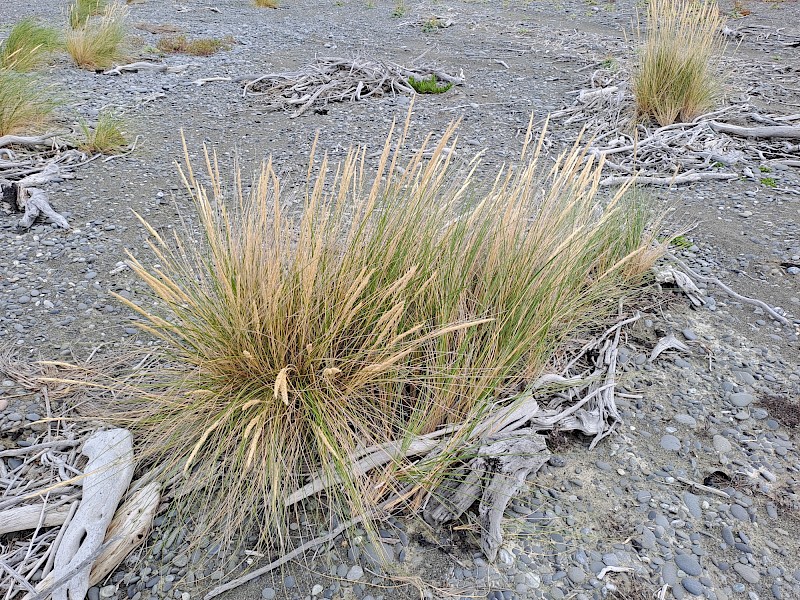
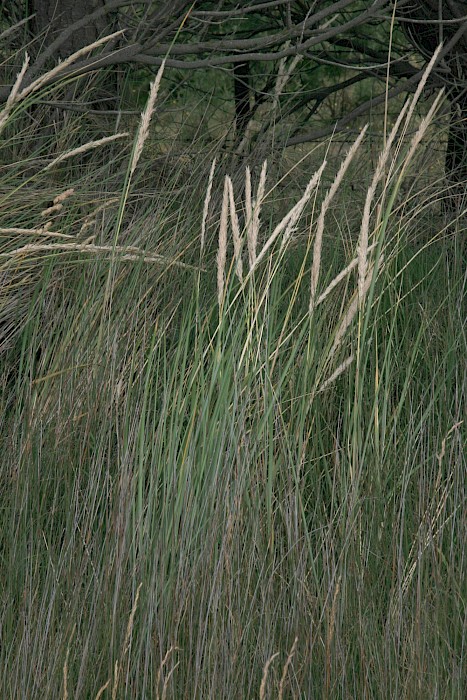
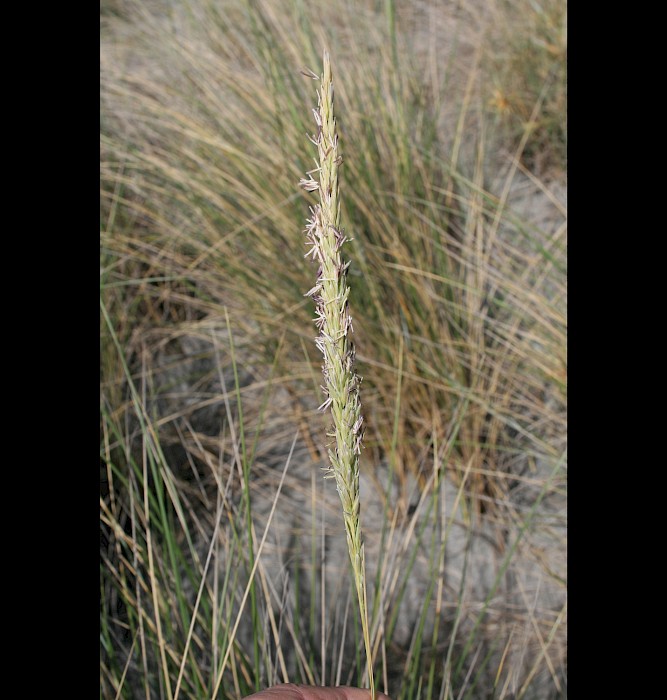
Marram (Calamagrostis arenaria) is a long-lived, perennial grass that is native to Europe and North Africa. It was introduced to New Zealand for sand stabilisation and was first recorded in the wild (naturalised) in 1873. The plant grows in dense clumps from extensive creeping rhizomes and has stiff, blue-green leaves that roll inward, especially in dry conditions. It flowers from November to February, producing dense, cylindrical flower heads, which develop into seeds. It tolerates drought, wind, salt spray and burial by sand. It reproduces by seed and vegetatively from rhizomes. Seeds are dispersed by wind. Rhizomes are spread by sand movement, soil movement and other human activities. Rhizome fragments readily produce new plants.
This description has been automatically generated using information from trusted sources. If you notice any errors or omissions, please let us know.