

Cortaderia selloana (Schult. & Schult.f.) Asch. & Graebn.
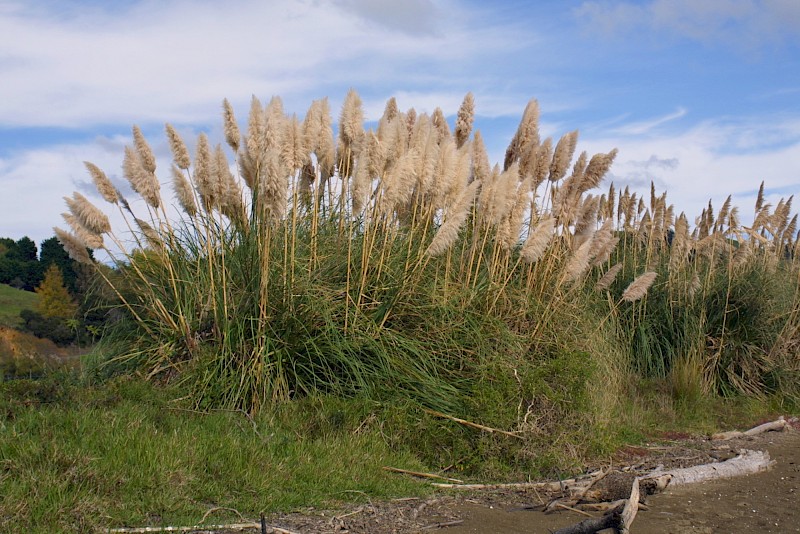
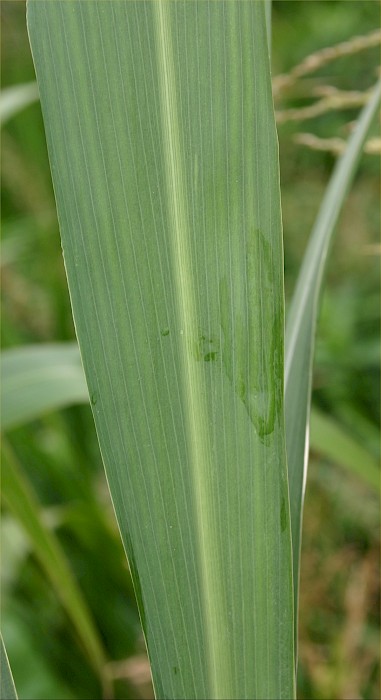
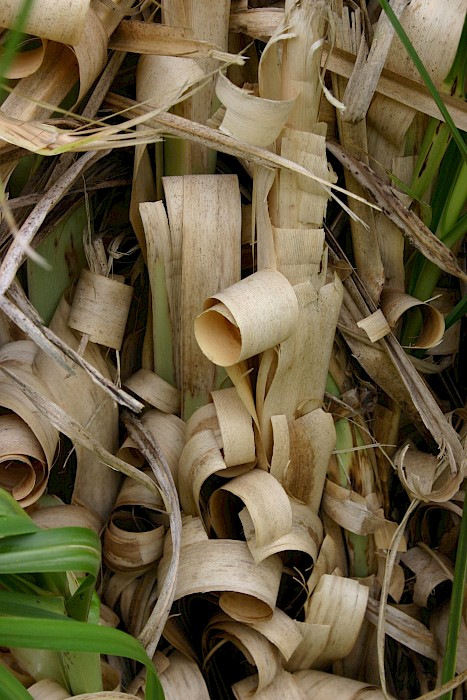
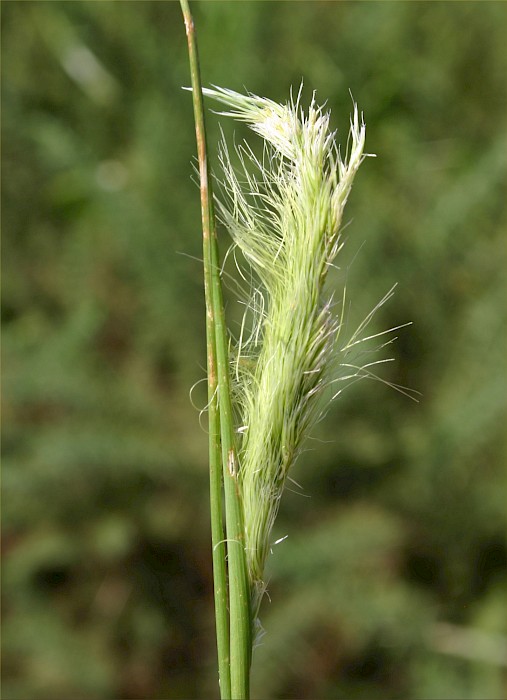
White pampas (Cortaderia selloana) is a long-lived, perennial grass that is native to South America. It was introduced to New Zealand as an ornamental plant and was first recorded in the wild (naturalised) in 1925. The plant forms large tussocks with long, arching leaves that have sharply serrated margins. It flowers from February to April, producing large, feathery, creamy white flower heads, which develop into numerous small seeds. It tolerates drought, wind, salt and a wide range of soil types. It reproduces by seed. Seeds are dispersed by wind. A single plant can produce large quantities of seed.
This description has been automatically generated using information from trusted sources. If you notice any errors or omissions, please let us know.
- Environmental Weeds
- National Pest Plant Accord (NPPA)
- Unwanted Organisms
- Auckland RPMP - Site-led
- Auckland RPMP - Sustained Control
- Gisborne RPMP - Sustained Control
- Tasman-Nelson RPMP - Sustained Control
- Waikato RPMP - Site-led
- Waikato RPMP - Sustained Control
- West Coast RPMP - Progressive Containment
- Chatham Islands RPMP - Organism of Interest
- Hawke’s Bay RPMP - Organism of Interest
- Southland RPMP - Organism of Interest
- Tasman-Nelson RPMP - Organism of Interest