

Berberis darwinii Hook.
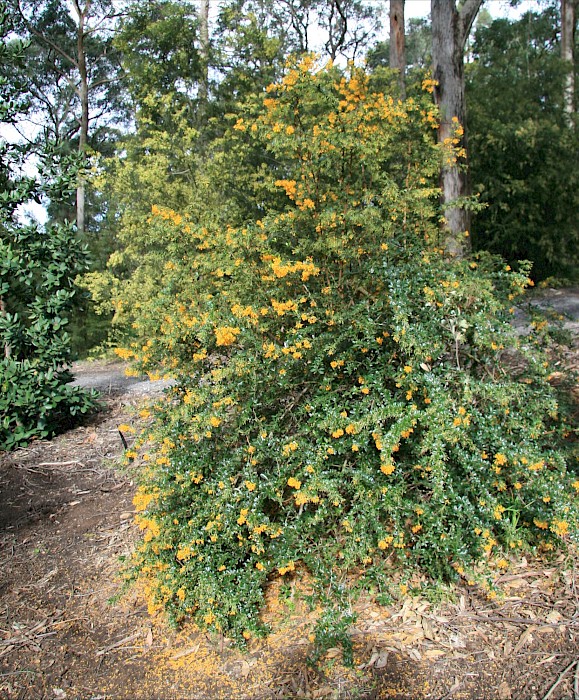
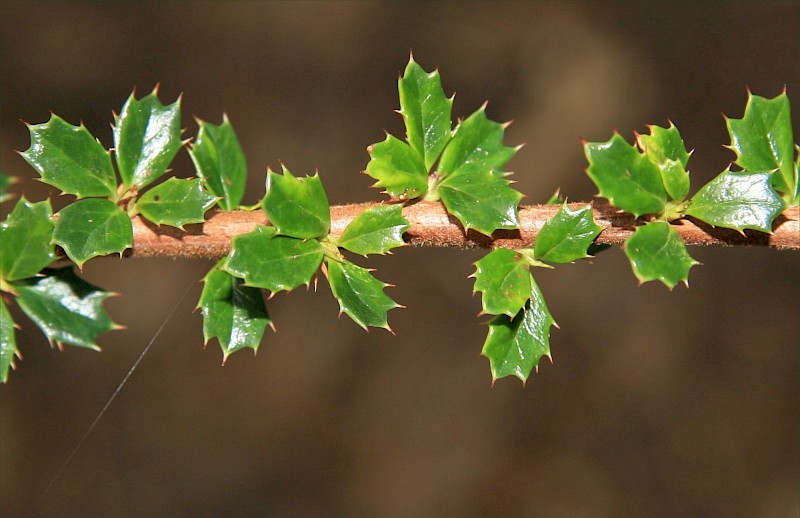
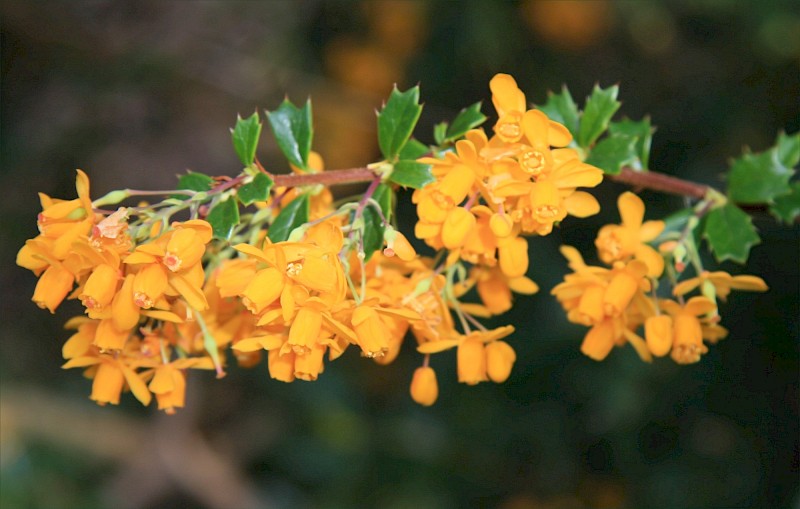
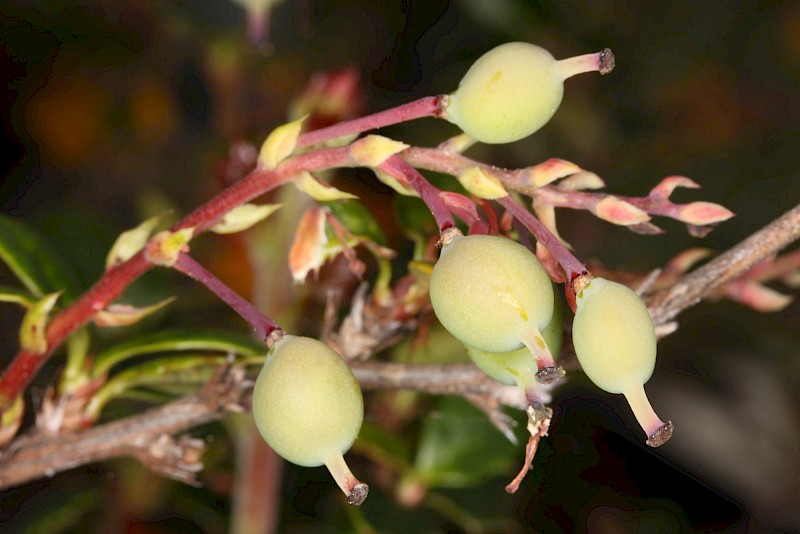
Darwin's barberry (Berberis darwinii) is a long-lived, evergreen shrub that is native to southern Chile and Argentina. It was introduced to New Zealand as a garden ornamental and was first recorded in the wild (naturalised) in 1946. The plant grows up to about 4 metres tall and has dark green, glossy leaves with 3–5 sharp spines along each edge. A five-pointed spine is present beneath each leaf. It flowers from July to February, producing hanging clusters of orange-yellow flowers, followed by dark purple to black berries with a bluish-white waxy coating from November to February. It tolerates shade, drought and frost, and is somewhat tolerant of poor drainage. It resprouts after physical damage and grazing. It reproduces by seed and vegetative growth. Seeds are dispersed by vertebrates, including birds and possums. The plant also regenerates from root suckers, layers and the crown. Seeds remain viable in the soil for about one year.
This description has been automatically generated using information from trusted sources. If you notice any errors or omissions, please let us know.
- Environmental Weeds
- National Pest Plant Accord (NPPA)
- Unwanted Organisms
- Auckland RPMP - Sustained Control
- Bay of Plenty RPMP - Exclusion
- Bay of Plenty RPMP - Progressive Containment
- Canterbury RPMP - Sustained Control
- Hawke’s Bay RPMP - Progressive Containment
- Manawatū-Whanganui (Horizons) RPMP - Progressive Containment
- Otago RPMP - Site-led
- Southland RPMP - Progressive Containment
- Tasman-Nelson RPMP - Site-led
- Waikato RPMP - Progressive Containment
- West Coast RPMP - Progressive Containment
- Tasman-Nelson RPMP - Organism of Interest